The jungle
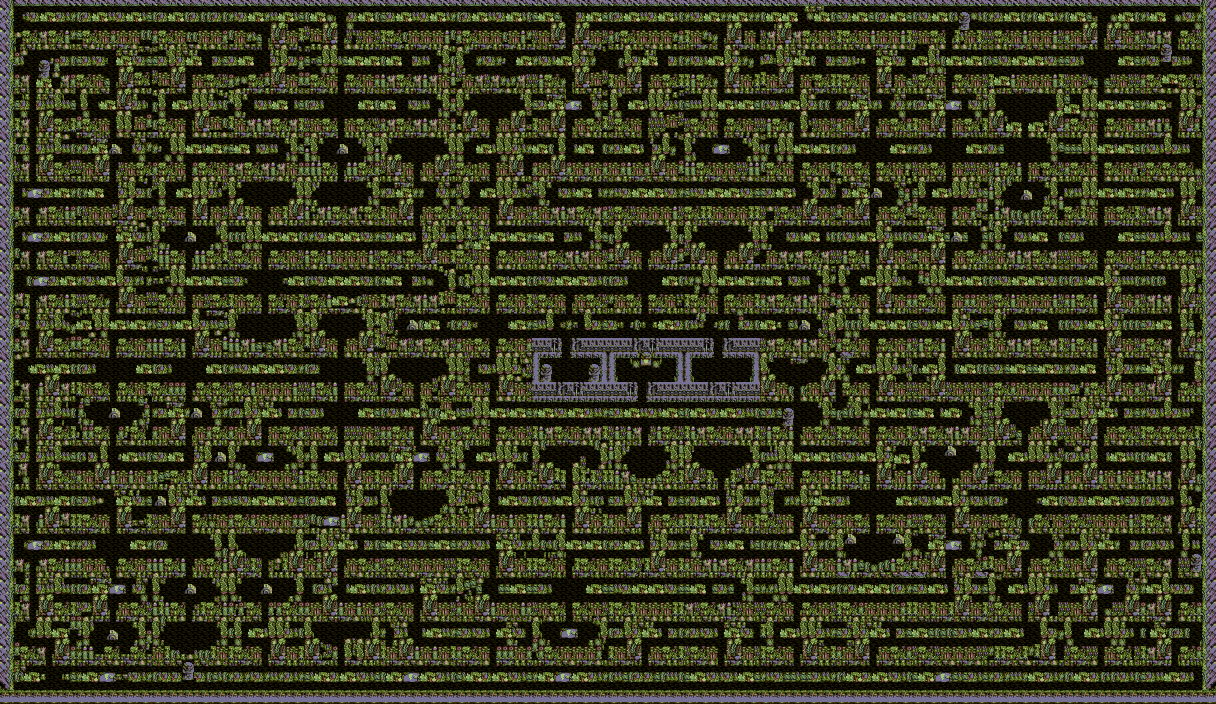
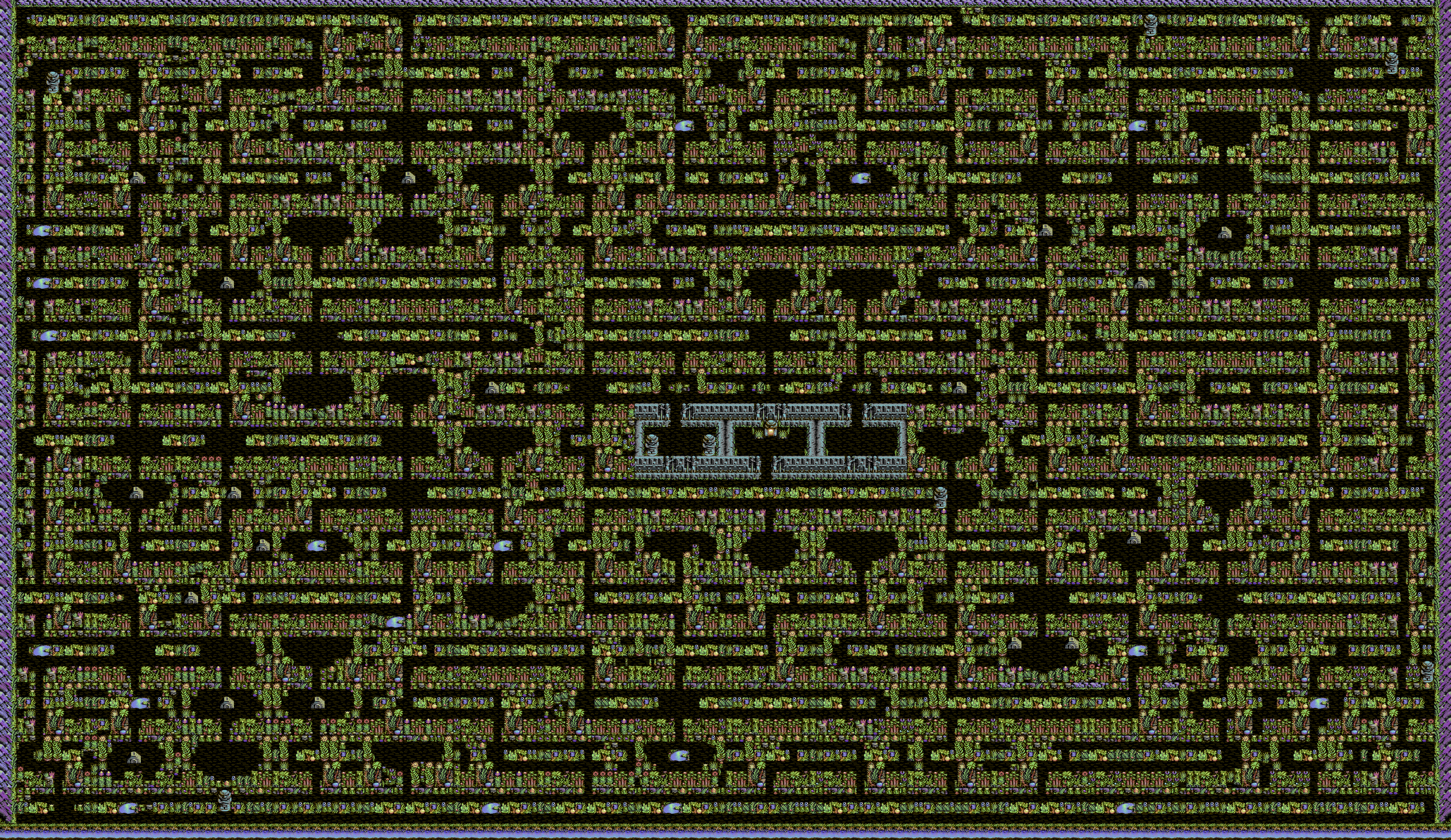
All 256 screens, 16 across and 16 down. Scenery only: no critters, no treasure, no amulet pieces.
Finding your way
- You start in a clearing just below the middle.
- The stone temple in the centre is the guardian's.
- The river runs along the south. That's Wulf country.
- Walk off any edge of a screen to reach the next one.
- Press M in the game for your own map of where you've been. Rooms you have not visited stay under fog.
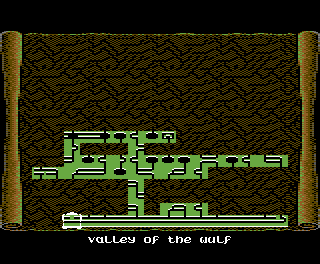
 Start
Maps of the original
Printed in magazines and drawn by players since 1984. The remaster keeps the same jungle; where things are hidden has changed.
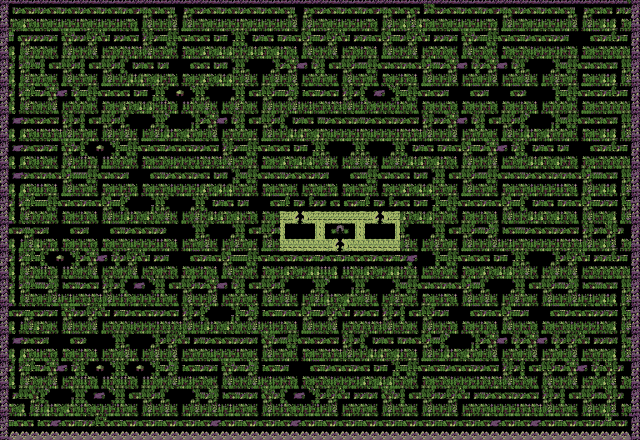
Commodore 64 original Every screen of the original C64 game.Drawn from the game's own data by Raistlin, for the remaster. 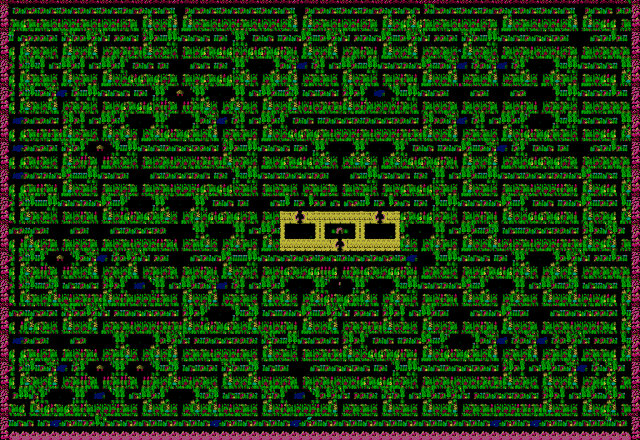
ZX Spectrum original Every screen of the ZX Spectrum game the C64 version was converted from.Source not yet known. If this is yours, tell us and we will credit it. 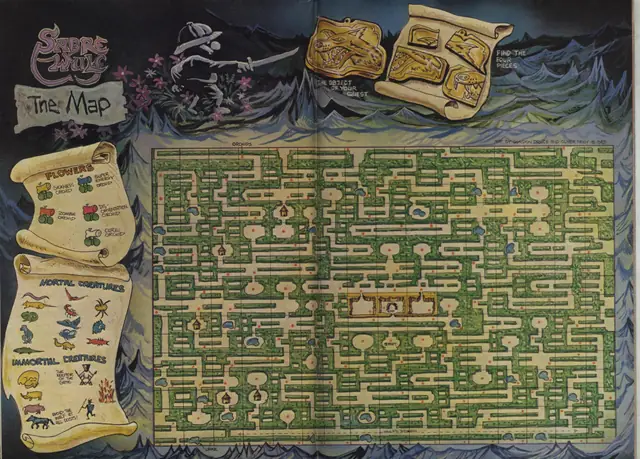
ZZAP!64, by Oliver Frey The painted map from ZZAP!64, with the flowers and creatures down the side.Artwork by Oliver Frey, published in ZZAP!64 (Newsfield). 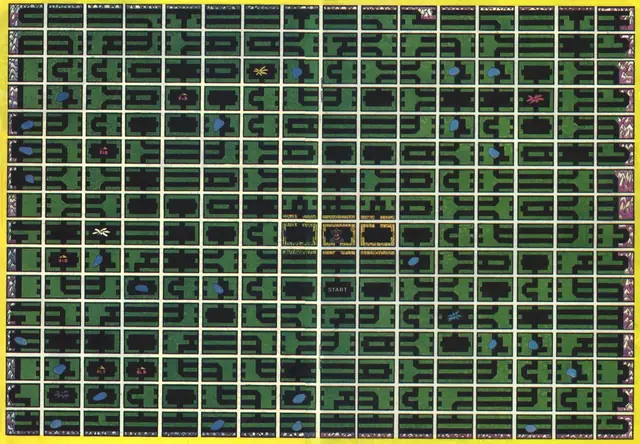
Printed map Screen by screen, with the start marked.Source not yet known. If this is yours, tell us and we will credit it. 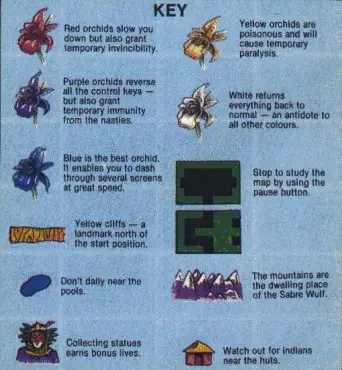
Printed map: the key What the orchids, pools, huts and landmarks mean.Source not yet known. If this is yours, tell us and we will credit it. 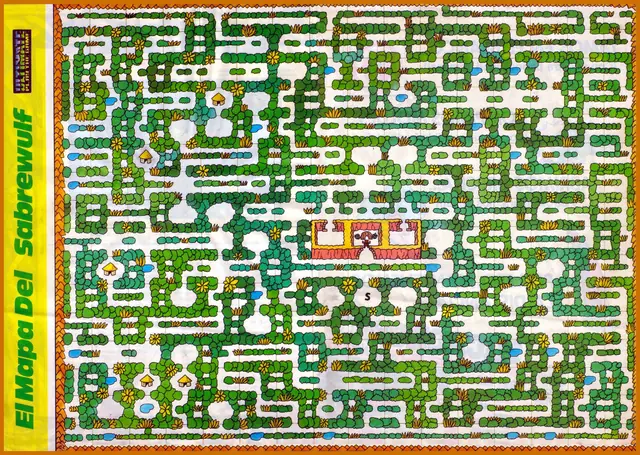
El Mapa del Sabrewulf A Spanish printed map, with the Ultimate logo.Source not yet known. If this is yours, tell us and we will credit it. 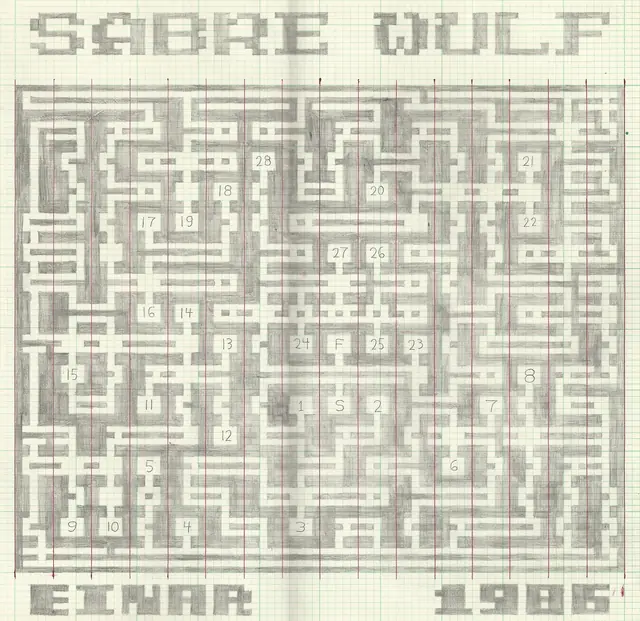
Einar, 1986 Drawn in pencil on squared paper.Drawn by Einar. 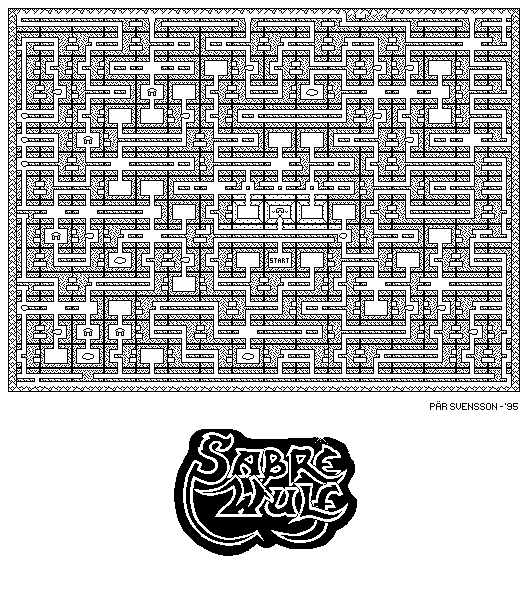
Pär Svensson, 1995 Drawn by hand.Drawn by Pär Svensson. 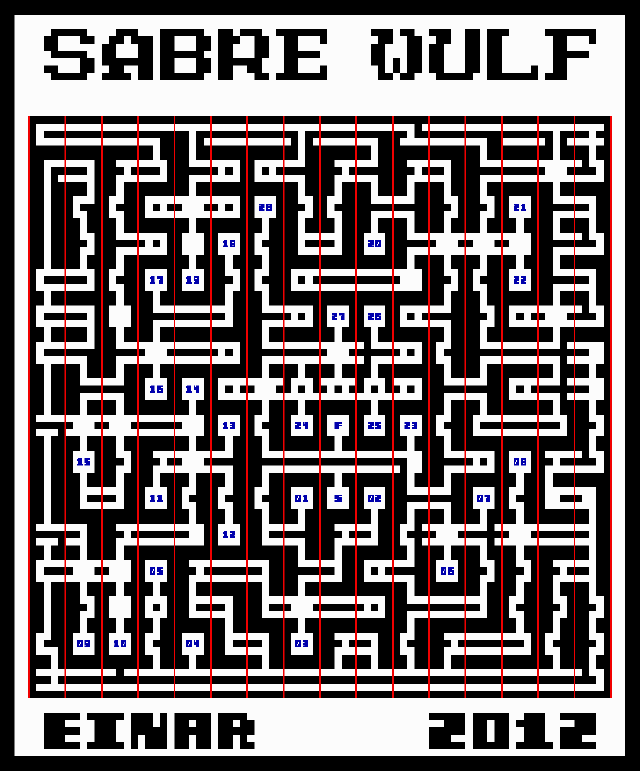
Einar, 2012 Einar again, 26 years on.Drawn by Einar.
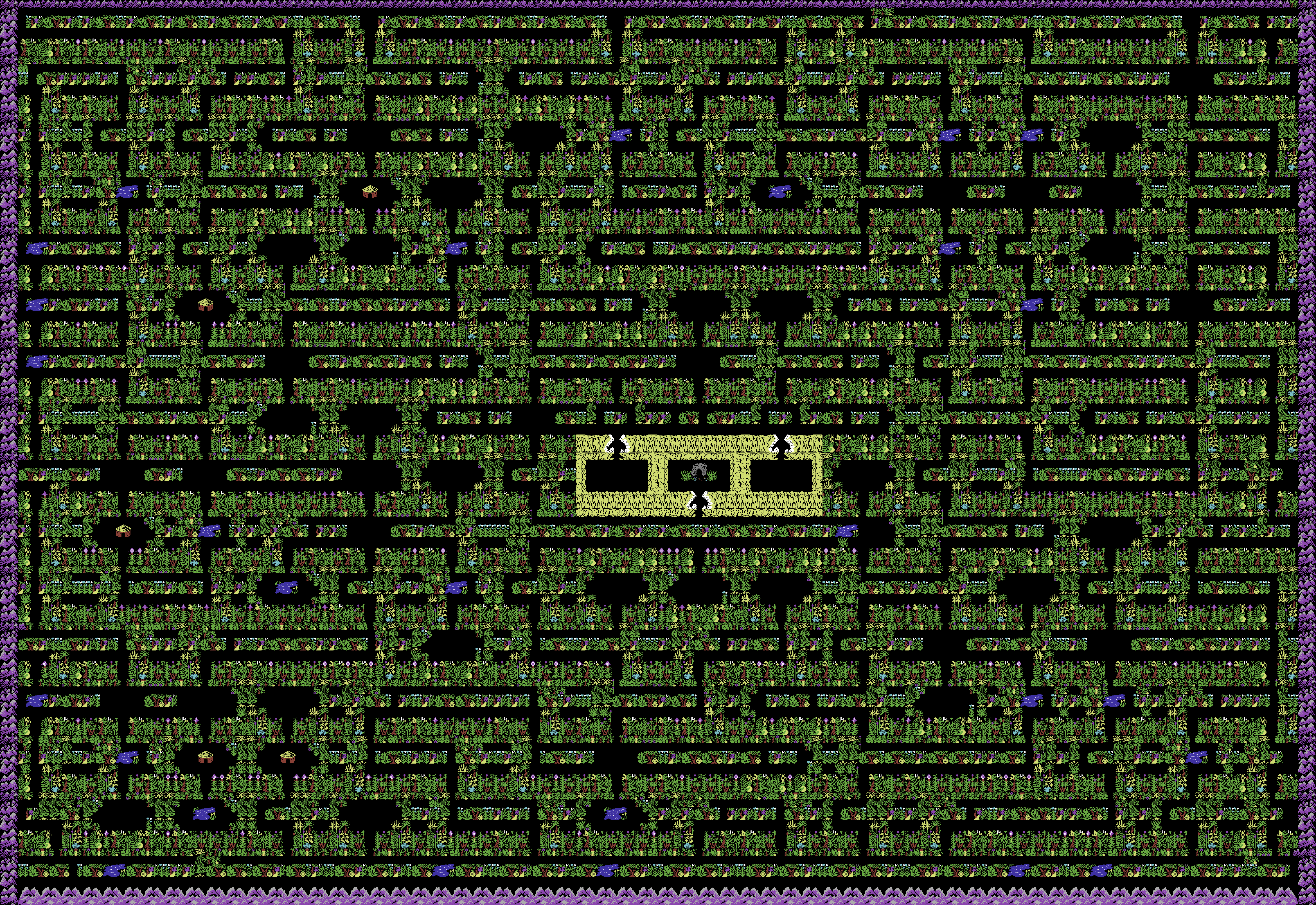
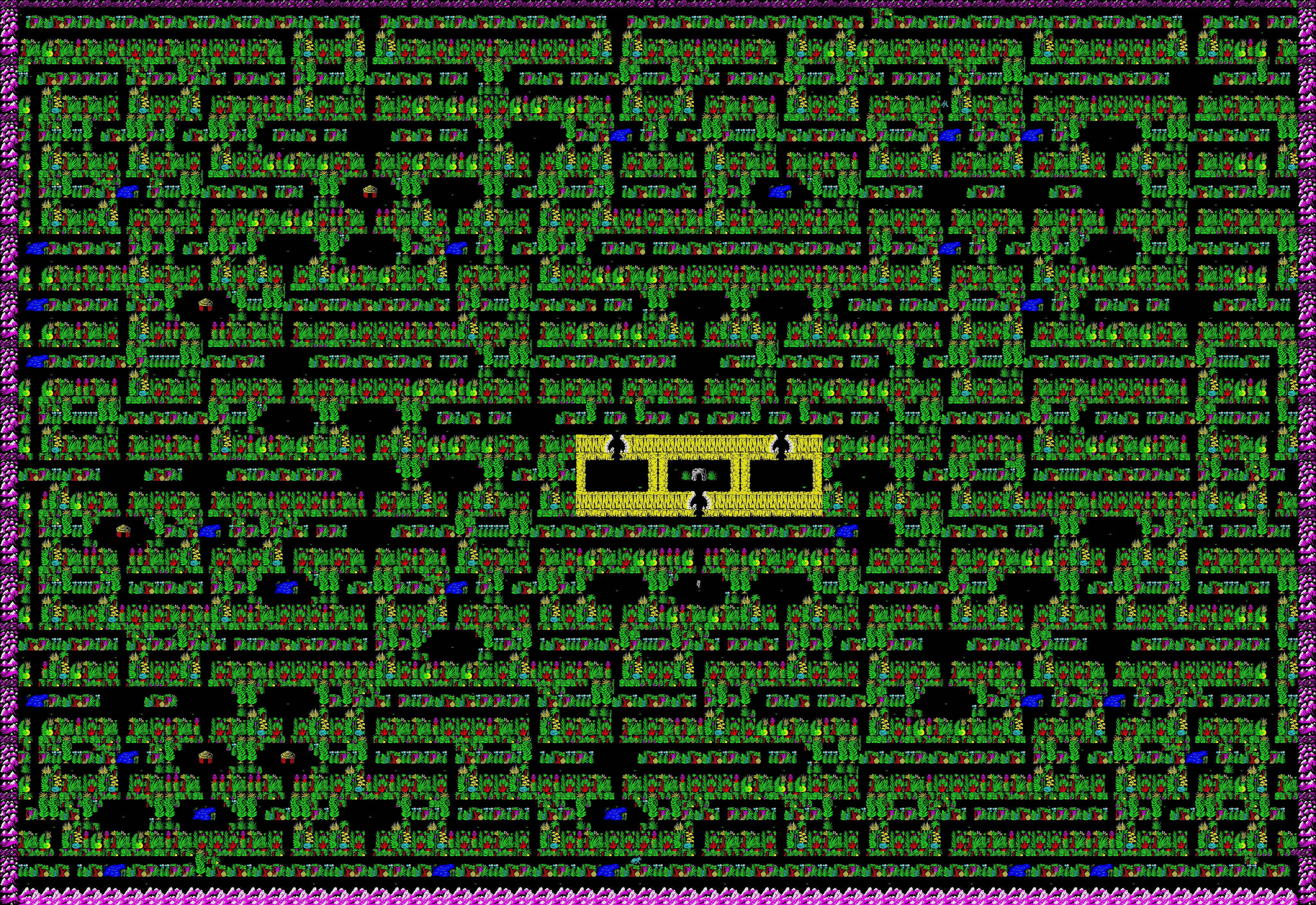
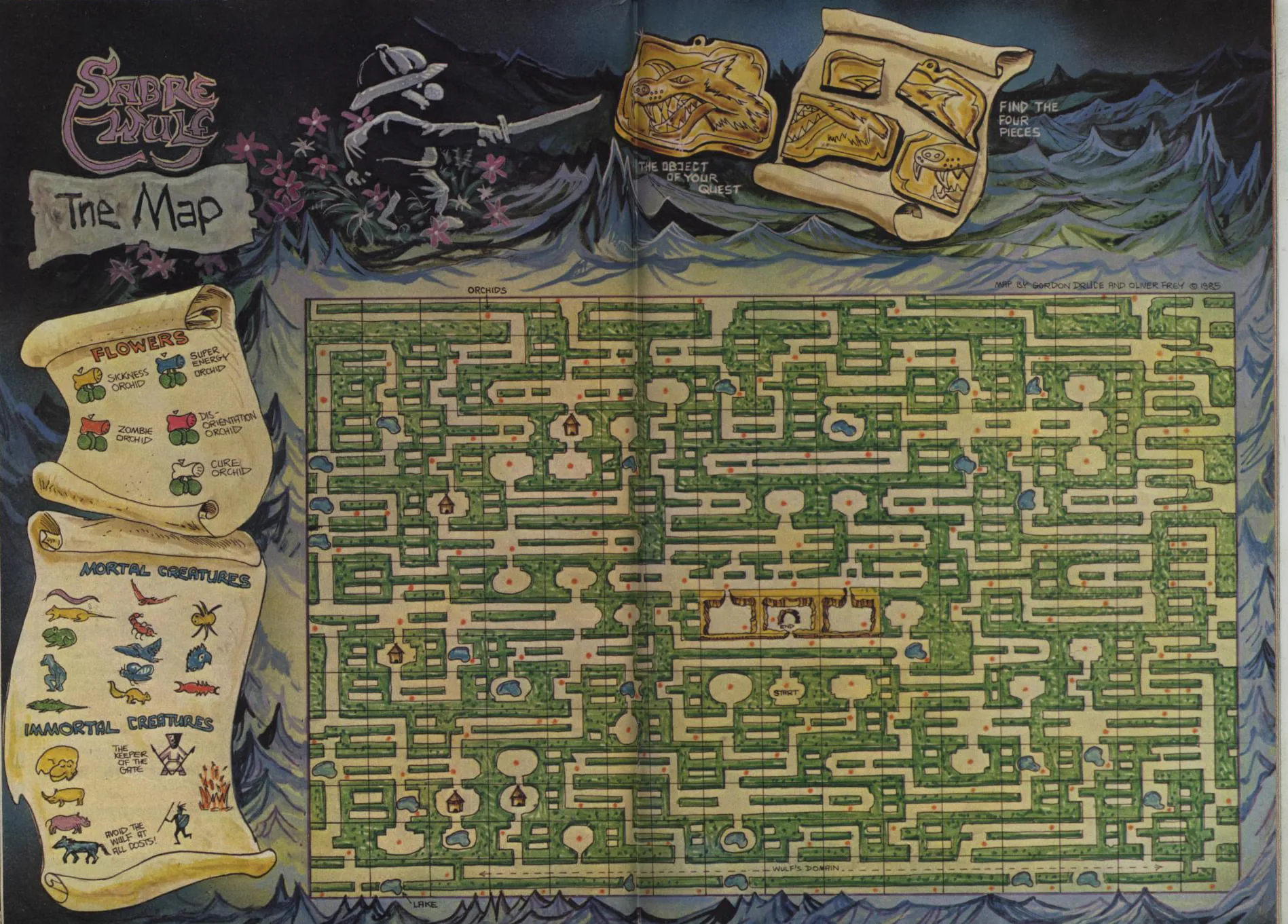
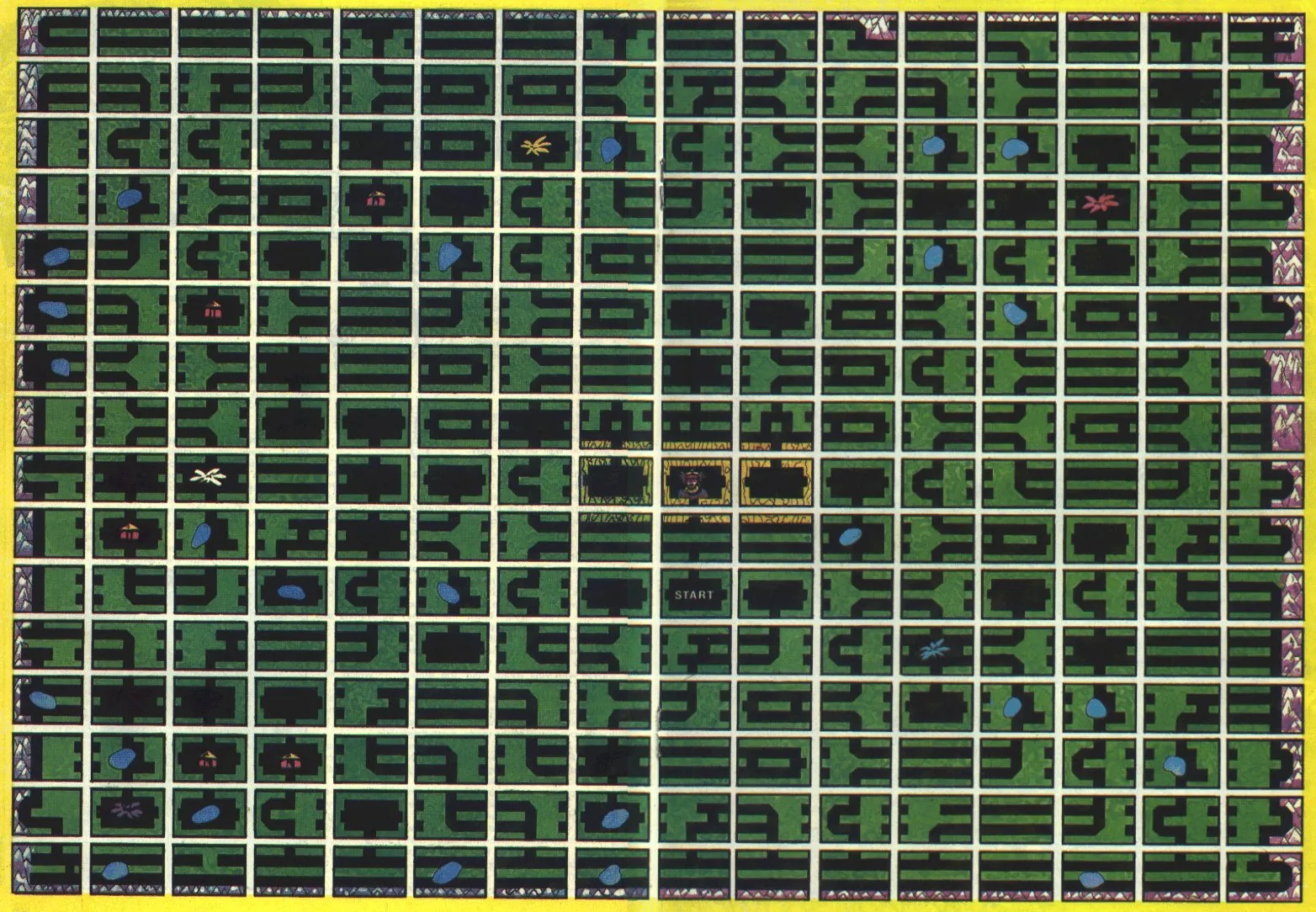
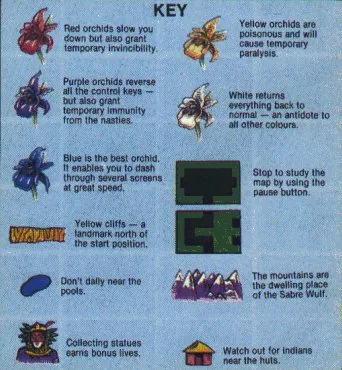
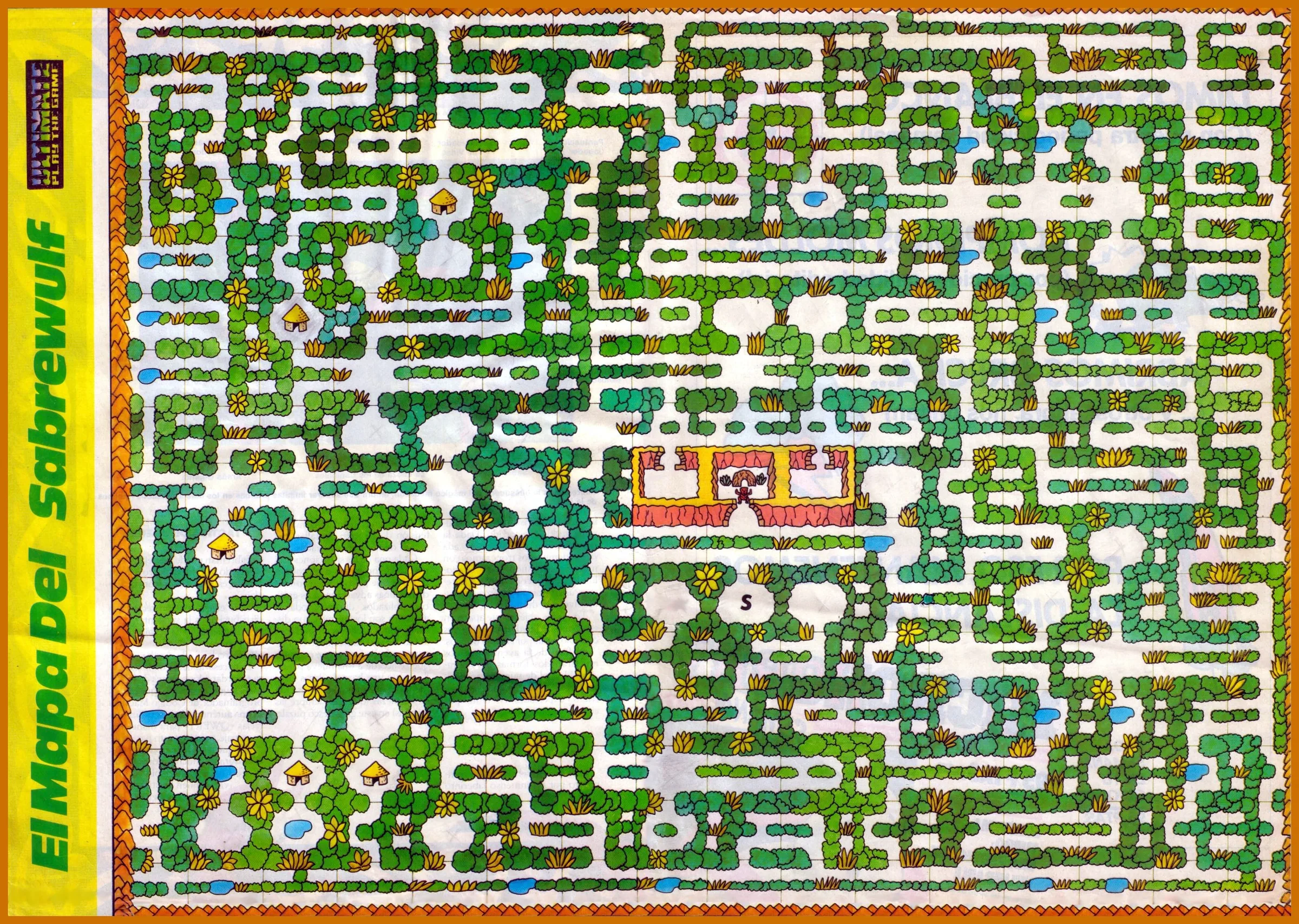
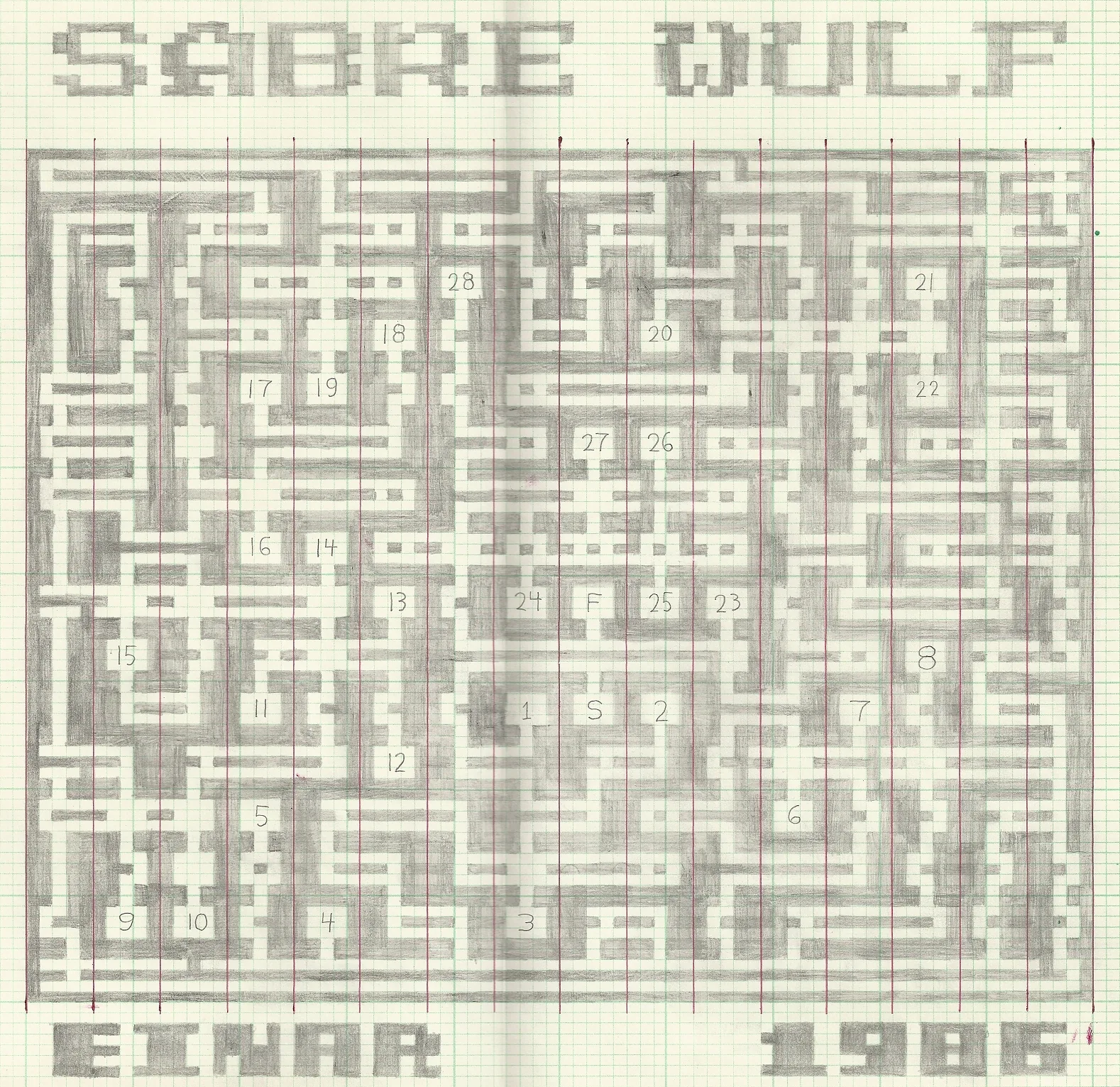
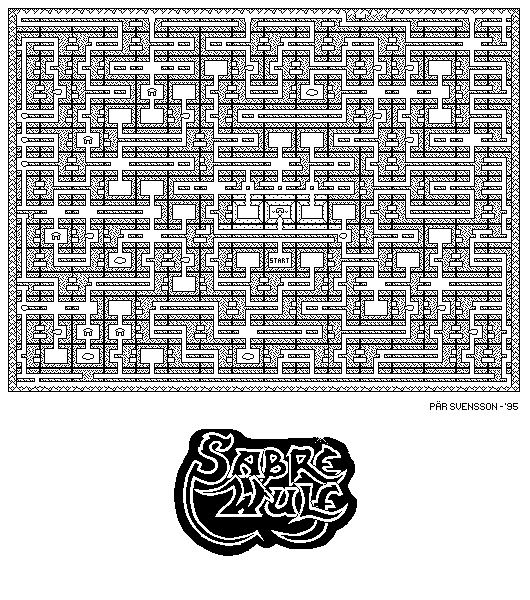
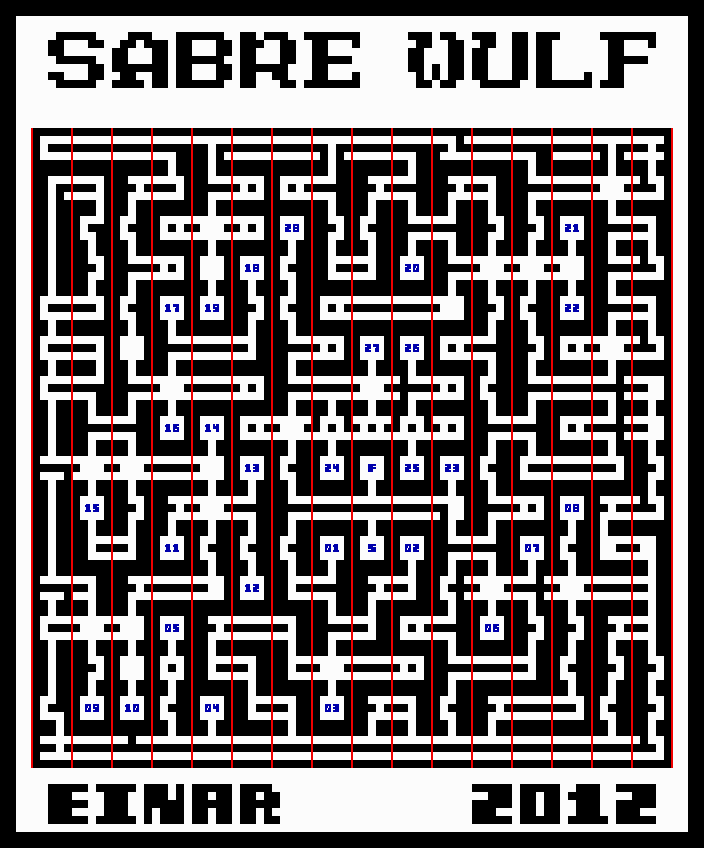
Each map belongs to the person or magazine credited under it, and shows Sabre Wulf, © 1984 Ultimate Play The Game, now owned by Rare Ltd. They are shown here for their history.
Maps of the same engine
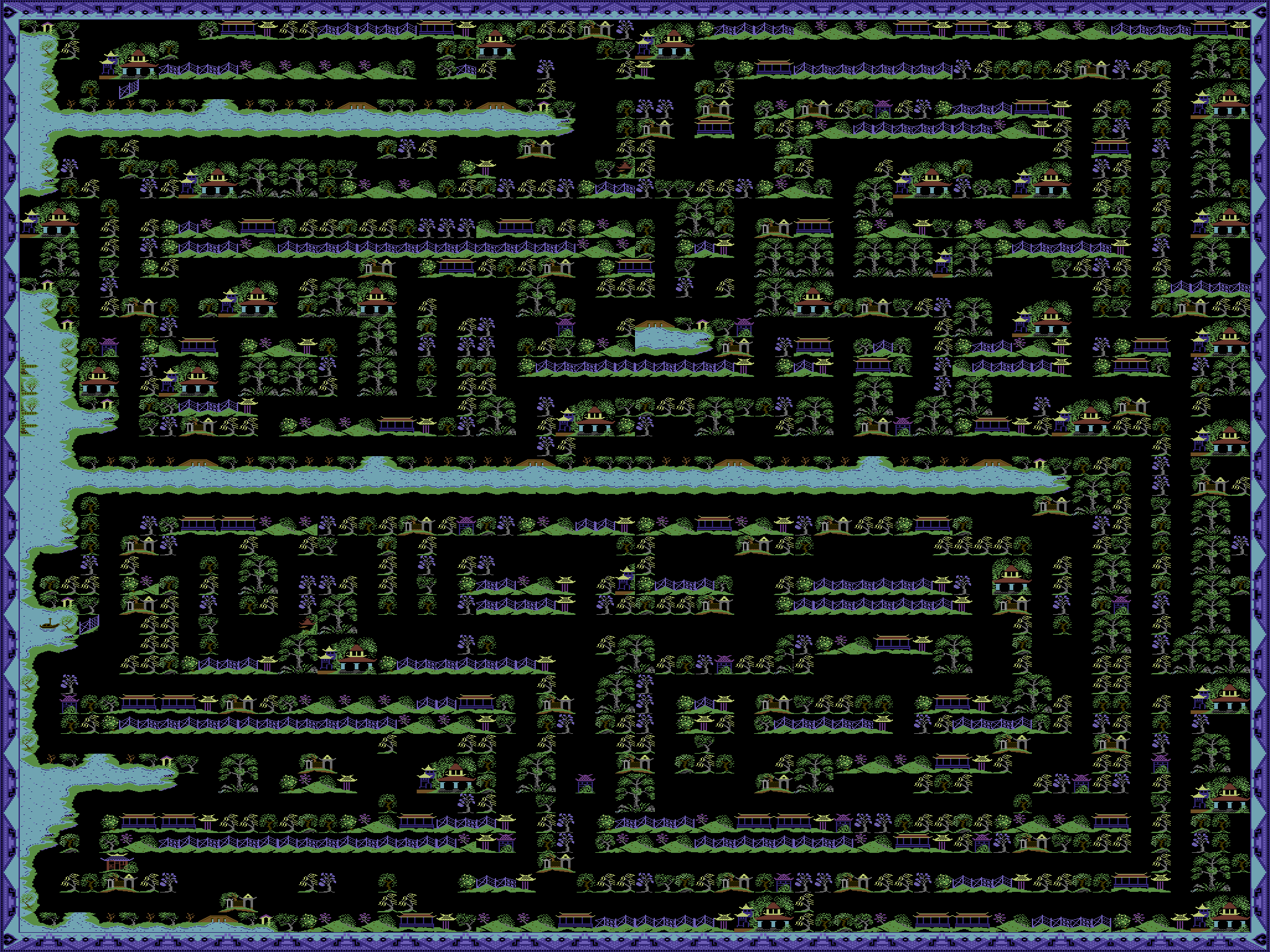
Greg Duddle, who converted Sabre Wulf to the C64, wrote two games of his own on very nearly the same engine. Both are mazes drawn with simple 4 × 4 tiles, where Sabre Wulf's tiles vary in size. Treasure Island and Sabre Wulf keep to two colours per character square plus the background, because neither stores colour memory. Willow Pattern uses full bitmap mode, for three colours plus the background.
They are much smaller worlds, too. Each is 8 screens across and 8 down, 64 in all, where Sabre Wulf's jungle is 16 by 16, 256 screens. Treasure Island's map would fit into one quarter of the jungle.
Look closely and the two maps are almost the same maze: Willow Pattern is Treasure Island's map redrawn with a new set of tiles, a Chinese garden in place of a pirate island.
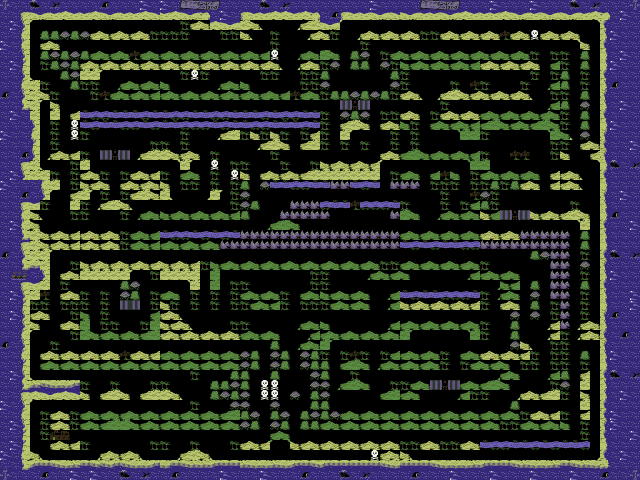
Treasure Island, 1984 Greg Duddle's pirate-island maze, with the ship at the left edge. 64 screens, 8 across and 8 down.Rendered from the game's own data. 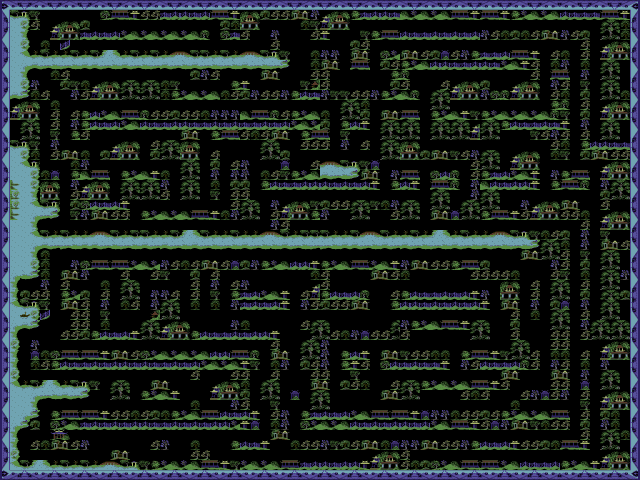
Willow Pattern, 1985 The same engine again, in a Chinese garden: bridges, pagodas and a river down the left. 64 screens, 8 across and 8 down.Rendered from the game's own data.
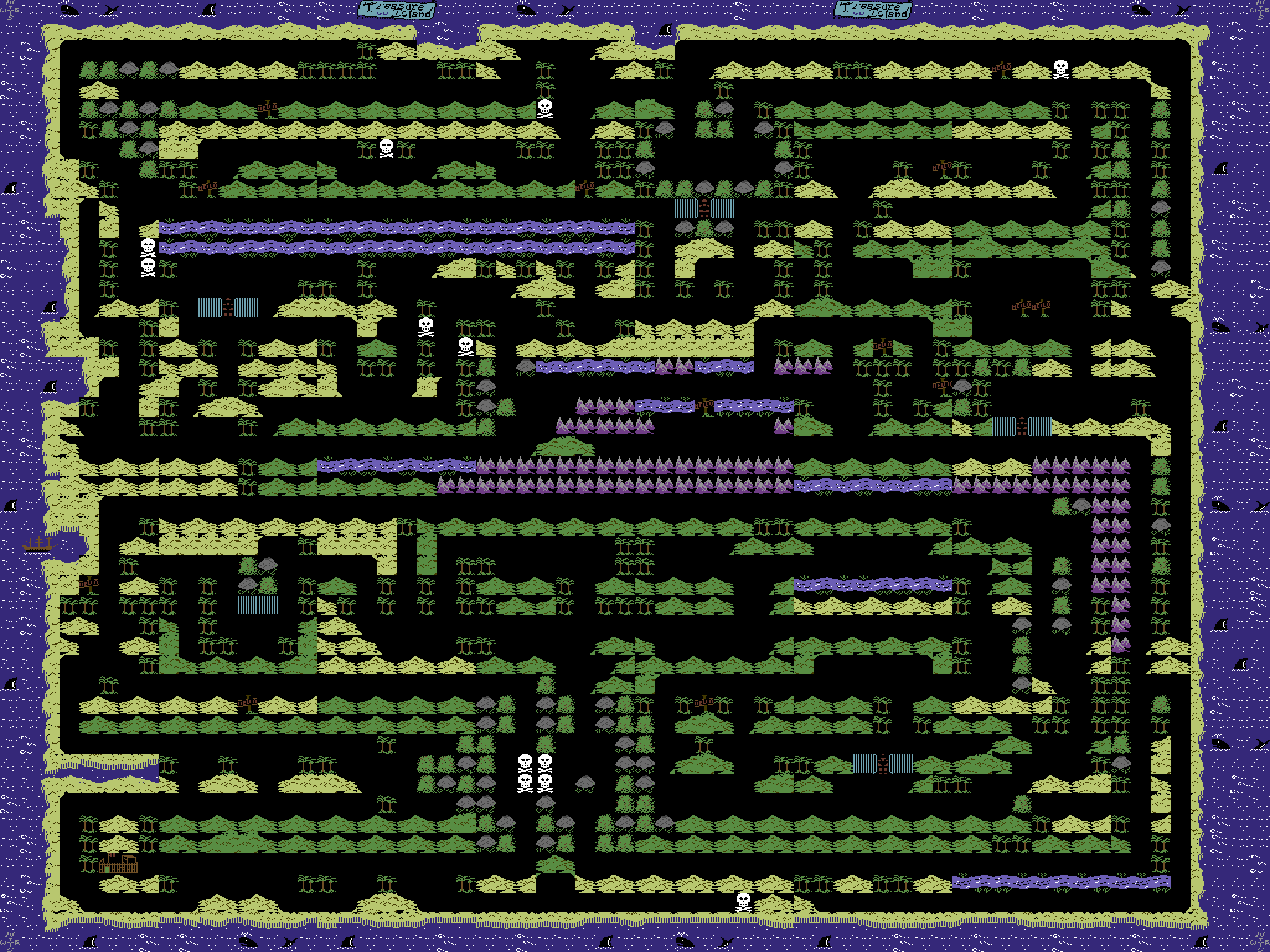
Treasure Island and Willow Pattern belong to their publishers, Mr Micro Ltd and Firebird. The maps are shown here for their history, beside Sabre Wulf's.